Rector Designate
Rev. Major Dr. Sirrano Kitson has been appointed the 21st rector
of St. Andrew Parish church effective January 1, 2006. He is an
old boy of Kingston College and says "he is a simple Christian
person from Allman Town" where he was born and raised. He
was baptized at Arnold Road Methodist Church in June 1956. He
was confirmed at St. Matthew's Church around 1966.
He says he is humbled by the call to serve as the 21st rector of
St. Andrew Parish Church to which he is no stranger, having served
as Curate in the early 1980's. He recognizes it is God's call
for him to be engaged in this area of Parish ministry. He pursued
his D. Min programme at Columbia Theology Seminary in Decatur,
Atlanta and graduated in May 2002. The title of his thesis was
"Biblical and pastoral hermeneutics' related to the role
of the pastor for the care of persons with HIV/AIDS". He
had been involved with the Jamaica AIDS support and Hospice which
influenced the research for the doctoral programme. He believes
that process helped to prepare him to make the transition from
his current area of ministry - military chaplaincy - to parish
ministry.
He along with his wife Denise and their three children - Matthew,
Timothy and Rachel are looking forward to joining the St. Andrew's
family. Similarly the St. Andrew Parish Church looks forward to
welcoming the incoming Rector and wishes for him and his family
every blessing.
[Based on an interview with Elsie E Aarons]
Back to Top
Bishop Thompson Leaves St. Andrew's

The Rt. Rev. Dr. Robert McLean Thompson
Bishop of Kingston
Photo Credit - Billy Perkins |
Rt. Rev. Dr. Robert Thompson, the twentieth Rector of St. Andrew
Parish Church, was consecrated and ordained Bishop on May 31,
2005. He was installed as Bishop of Kingston at the Cathedral
of St. Jago de la Vega. Bishop Thompson leaves St. Andrew's on
September 29, 2005. He demitted the position of Rector of St.
Andrew Parish Church on September 30, 2005. His last sermon as
Rector of this Parish is reproduced below.
Sermon Text: Matthew 21: 28-32
One is always left with an awesome feeling when the name
St. Andrew Parish Church is mentioned, and for good reason.
The rich heritage in architecture, art, liturgy and Anglican
tradition leaves no doubt in the minds of those entrusted
with its care that we must do so by guarding it with a jealous
hand. There are two mistaken assumptions that people generally
make about St. Andrew's. The first is that it is a rich people's
church and secondly, that those who worship here Sunday after
Sunday, are so protective of what we hold dear that we remain
cold and stiff. My family and I - as well as countless others
who visit and decide to stay - have found the opposite. The
fascinating thing about this great Parish Church is that in
spite of its size, in spite of the fact that it is the largest
Anglican congregation in the Province of the West Indies,
one is able to experience in this house of God an enriching
life of Christian fellowship. There is a feeling of family
for everyone who desires to be part of it. My predecessor,
the late Bishop Spence laid the foundation that made this
possible. Perhaps his greatest legacy was the way in which
he made ordinary Jamaicans feel that not only did they have
a place in the pew, but in sharing in the leadership of the
church.
One of the challenges I had in preparing this sermon was
deciding on what to focus on. Should I attempt a reflection
on my ministry, my regret in not completing some of the programmes
and projects dear to me? But I will do none of that as I constantly
try to remind myself, that once we are about God's mission,
and not our own, God has already made provision for their
completion. As one great preacher once said: "If what
we are about doing is of any importance, if it is to have
any lasting effect, then it is a job we can never complete."
The task of each generation is not to complete the job, but
as the book of Proverbs puts it "to ensure that there
is something for our children to inherit." My hope and
prayer as I take my leave from you, is that you will muster
enough faith and interest in continuing the work of our ancestors
and to make the necessary sacrifices to ensure that your witness
to the Gospel of Jesus Christ will be effective and strong.
This leads me to say a brief word about what I have come
to appreciate about the spirit that drives St. Andrew's. Every
congregation has its own spirituality built up over years.
And though no one expression of that spirituality at any given
time ought to be canonised, we nevertheless must remain sensitive
to what that spirituality is. It is the thing that identifies
the place. It is what gives it its life and energy.
St. Andrew Parish represents what in Anglicanism is called
the Via Media, the middle way. It represents the best of our
evangelical tradition on the one hand and our Catholic tradition
on the other. I found something quite interesting in the answers
given to the question: "What qualities you most desired
in a new rector? At the top of the list was spirituality and
somewhere towards the bottom was Anglican tradition. That
in itself is a contradiction - a contradiction born out of
a mistaken view, which sees tradition as something belonging
to the past. (One of the great strengths of Judaism is its
very healthy view of history. History is not something that
belongs to the archives. Rather it is viewed as something
one lives into
. ). Tradition in its original meaning,
describes an action and a process, and so may best be understood
not as a noun but as an adjective describing the process of
"handing down". It is in this sense that Anglicans
understand the word tradition, as the "handing over"
of the story of God's presence and love in Christ. Tradition
therefore is a living and developing heritage out of which
we experience and celebrate the Good News of the Gospel. And
we believe that in the process of sharing this Good News,
both the "evangelists and the evangelised" are transformed
by a fresh appreciation of the Gospel. It does not reflect
a desire to sell or dominate; it arises from love and compassion
on the part of those who have found something wonderful and
want others to share in its joy. It is, as the old adage has
it, like one beggar telling another where to find bread. It
is precisely for this reason why we have chosen over the years
to express our evangelism through our missionary outreach.
Far too many Christians, including Anglicans, have at best
only a superficial appreciation and understanding of their
faith. Any renewed emphasis on Evangelism then, will naturally
invite us to ask: What is it about the Gospel that is good
news? What is it about Christianity that would make others
want to come to faith in Jesus? To ask such questions has
the potential of opening new areas of reflection about our
own faith journey, and hopefully lead to the evangelisation
of our own members.
We come now to our Gospel and the story of the two brothers.
Someone once said, that if there had been an inquest into
Jesus' death; this parable would probably have been presented
as one of the things that got him killed. According to Matthew,
Jesus told it during the last week of his life in Jerusalem.
As he returned to the temple the chief priests and elders
cornered him. The main thing they wanted to know was who had
given him authority to do the things he was doing? Instead
of answering them, he did something that was very typical
of him. He asked them a question: "What do you think?"
and then he told the story. Jesus was never one to give people
answers they themselves could come up with. He knew truth
is something people have to discover for themselves, so he
went the extra mile in helping us do that. The story he told
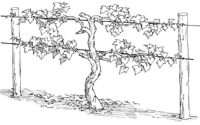
that day was the story of the two brothers. When the father
asked each of the sons to go work in the vineyard, the first
said he would not go but later changed his mind, and the second
while graciously agreeing to work later fails to fulfill his
commitments. Which brother, Jesus asked his critics, did the
will of his father?
It was an easy answer, as easy for them as it is for us.
The first is obedient, while the second isn't. It was not
what either son did that mattered in the end, but what they
didn't do. But that was not what got Jesus in trouble with
the authorities. It was when he told them which brother they
were. They were the yes men, he told them, who said all the
right things, believed all the right things, stood for all
the right things, but who would not do the things God asked
them to do. On the other hand the tax collectors and prostitutes
may not on the surface look much like God's people, especially
when compared to the pious religious authorities. The difference
lies not in their appearances, but in their respective responses
to the message of John. The tax collectors and prostitutes
believed the message of John, while the religious authorities
were resistant.
They were resistant to the message of John and Jesus because
they thought they were right. They had become so attached
to their own ideas about what is right that it had become
difficult for them to accept correction. First John the Baptist
and then Jesus suggested that they trade in their beliefs
for a fresh experience of God, but they could not do that.
People they despised were going into the kingdom ahead of
them, possibly because these people were far more in tune
with their vulnerable side.
This parable is not just about hypocrisy, which has always
been the number one charge leveled against religious people
- that we say one thing and do another. It goes deeper than
that. It speaks to the unconscious way many of us substitute
our beliefs about God for our obedience to God, as if it were
enough to say, "I go sir" without even exercising
a muscle to get out of the chair. A great part of the struggle
many persons are having today has to do with the tension
.
the experience between a desire to be autonomous, to do my
own thing, and a kind of fearful conformity to some religious
activity which they can hardly find time to understand. I
believe it is something of that unresolved tension that existed
in the mind of the second son, and in the lives of many of
our young people today. This makes them want to say; "yes
sir I will go", but who in the end refuse to go. Many
of us have had that experience. One of the great joys of a
mature religious experience is to come to that point of realizing
that doing God's will doesn't have to be resisted. But the
question is how do we get there? How did the first son get
to the point of first refusing to go, but later changing his
mind?
The story of Abraham, the great model of faith, gives us
a clue as to how we might live with such a tension and find
joy and freedom in an obedient response to the love of God.
I will make reference to two passages from Genesis. The first
is from Genesis chapter 18:22-32 where Abraham stubbornly
and boldly stands up to God and instructs him in the way of
justice. "Will you indeed sweep away the righteous with
the wicked? Suppose there are fifty righteous within the city;
will you then sweep away the place and not forgive it for
the fifty righteous who are in it?" Abraham holds his
own with God. In chapter 22: 1-14, however this same Abraham,
who earlier was shown to be abrasive is presented as a model
of submissive faith, prepared to give up even his only beloved
son at the command of God. We would not have expected in chapter
18 that Abraham would be prepared for such obedience. And
yet it is precisely the kind of courage demonstrated by Abraham
in chapter 18 that makes possible his radical obedience in
chapter 22. I would suggest that when you find some time you
may want to read these passages in juxtaposition to see if
you find any parallel between the story of Abraham and the
action of the first son in our parable.
The point I want to make is simply this that faith and obedience
come by way of resistance and submission. By way of what Walter
Brueggemann refer to as protest and praise.
We thank your very supportive and caring family. Your wife
Charmaine and sons Mathew and Joseph never allowed the constant
challenges and demands made on your time and energy to be
an issue in your family relationships which are so secure
and strong.
Back to Top
Farewell To The Rector From Dr. Vin Lawrence - Rector's Warden
Bishop Thompson, you came to us with a reputation of being loved
by your previous congregation - St. Jude's, and we soon found
out why. As the congregation said six (6) months ago when you
were being elected Bishop, you are a committed Christian with
unusual strength of character and a fine mind. You have worked
very hard here with us at St. Andrew's - you have been sensitive,
astute and a man with vision and a forward thinker. Your administrative
skills, businesslike approach and commitment to strategic planning
have guided the management process at this Parish Church over
the past sixteen years.
You have not only sustained extensive outreach activities but
through your dynamic leadership has established the challenging
but vital St. Andrew Care Centre for Street Boys. Your commitment
to mission has resulted in further outreach to the Ambrook Lane
Community, the upgrading of the St. Thomas Mission at Majesty
Gardens and the revival of the St. Clement's mission at Kencot.
As you yourself has stated; you have baptized our children,
prepared hundreds for confirmation, witnessed the marriage of
many and journeyed with us as we grieve through our "nights
of sorrow". You have ministered to the sick, the bereaved
with your own special gift of love, care and compassion. As you
leave us, on behalf of this Congregation and as your Warden for
the entire period of your service to and leadership of this Congregation,
we want to say:
-
Thanks for the spiritual maturity and wisdom you have
displayed in teaching and proclaiming the Gospel;
-
Thanks for the personal commitment you have to serving
and being the exemplary servant leader with the display
of intellectual and analytical skills shaped by prayer
and study;
-
Thanks for the Pastoral and Spiritual Leadership which
your servant's heart has nurtured and sustained;
-
Thanks for the faith you possess and engendered in
us;
-
Thanks for the discipline and authority you so clearly
displayed underpinned by your intimate knowledge and application
of the Anglican Tradition and Canons of the Church;
-
Thanks for the compassion and appreciation of each
person's worth similar to that of your predecessor the
late Bishop Herman Spence;
-
Thanks for the exemplary lifestyle example you have
set for us in living out God's Word.
We thank your very supportive and caring family. Your wife Charmaine
and sons Mathew and Joseph never allowed the constant challenges
and demands made on your time and energy to be an issue in your
family relationships which are so secure and strong.
We rejoice with you, as our entire Diocese through its Synod
has given due recognition to your skills, talents and commitment
and have therefore called you the Shepherd to provide wider and
higher service, as the Diocese launches on its process of Transformation
and Restructuring the Mission. Thank you and GOD BE WITH YOU.
Back to Top
Sunday School Activities
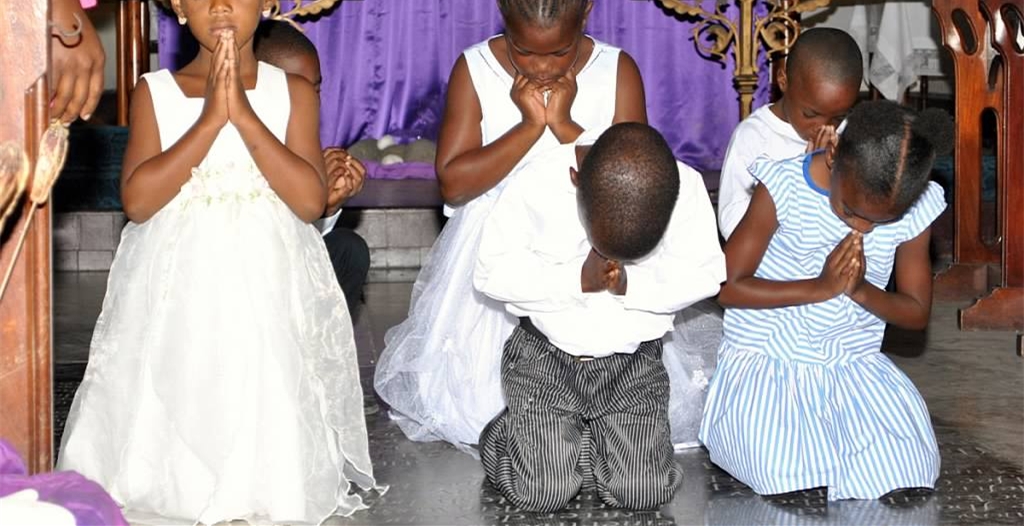
Sunday School Day was held on Sunday, May 22, 2005 at the 9:45am
Family Eucharist. New teachers - Miss Joelle Gayle, Miss Noelle
Gayle and Miss Janice Thomas - were commissioned by Rev'd. Fr.
Robert McLean.. Prize giving was held on the previous Sunday as
part of the Sunday School Month celebrations. Certificates were
presented for Attendance, Participation and Helpfulness and prizes
for the Boy and Girl of each class and for outstanding participation
and helpfulness. The Rector's Trophies for Sunday School Boy and
Girl of the Year were presented. The trophy for the Girl of the
Year 2004-2005, was shared by Moyen Campbell and Marie Claire
Willis and the Boy of the Year went to Brad Hamilton.
The winner of the Eric Morrison Shield for outstanding performance
in the Sunday School, for 2004-2005 was the Bible Quiz Team trained
by Miss Fay Duncan. They placed 3rd in the Kingston and St. Andrew
Sunday School Area Council Bible Quiz in February 2005. The team
consisted of Captain - Jason Ewer, Vice-Captain - Moyen Campbell,
and team members Douglas Evelyn, Anthony Williams and Oliver McRae.
340th Anniversary
One of the highlights of the celebrations was the Gala Banquet
which took place at the Jamaica Pegasus Hotel on October 6, 2005.
The Rt. Rev. Riah Abu El Assal Anglican Bishop in Jerusalem was
the Guest Speaker. He also gave a Public Lecture on Tuesday, October
4, 2005 at the Parish Church on the topic - Arab Christians: an
endangered species. While in Jamaica his schedule included a visit
to the North Coast and interviews with media personalities. He
met with clergy of the Diocese as well as staff and students of
the United Theological College of the West Indies.
On Sunday, December 4, 2005 the year of celebrations came to a
triumphant ending with a Service of Thanksgiving with the Lord
Bishop as the Chief Celebrant. The Bishop chose as his text Genesis
28: verses 16 and 17. This was the same text used by the first
rector at a service on January 16th 1686 when the foundation stone
of the new church building was laid.
Back to Top
Services For Christmas 2005
December 18
- 6:00 p.m. - Service of Lessons and Carols
December 24, Christmas Eve
- 11:00 p.m. - Carols
- 11:30 p.m. - Blessing of the Christmas Manger
- 11:45 p.m. - First Mass of Christmas begins with Solemn Procession
December 25, Christmas Day
- 7:00 a.m. - Sung Eucharist and Sermon
- 9:00 a.m. - Holy Eucharist and Sermon
- 11:30 a.m. - Service for Shut-ins
- 6:00 p.m. - Holy Eucharist
December 26, St. Stephen's Day
- 9:00 a.m. - Holy Eucharist
December 27, St. John the Evangelist
- 9:00 a.m. - Holy Eucharist
December 28, The Holy Innocents
- 6:30 a.m. - Holy Eucharist
December 30
- 9:00 a.m. - Holy Eucharist
December 31, New Year's Eve
- 11:00 p.m. - Holy Eucharist and Sermon
January 1, 2006, Feast of the Holy Name
- 6:30 a.m. - Holy Eucharist
- 8:00 a.m. - Holy Eucharist and Sermon
- 6:00 p.m. - Holy Eucharist and Sermon
Back to Top
340th Anniversary
One of the highlights of the celebrations was the Gala Banquet
which took place at the Jamaica Pegasus Hotel on October 6, 2005.
The Rt. Rev. Riah Abu El Assal Anglican Bishop in Jerusalem was
the Guest Speaker. He also gave a Public Lecture on Tuesday, October
4, 2005 at the Parish Church on the topic - Arab Christians: an
endangered species. While in Jamaica his schedule included a visit
to the North Coast and interviews with media personalities. He
met with clergy of the Diocese as well as staff and students of
the United Theological College of the West Indies.
On Sunday, December 4, 2005 the year of celebrations came to a
triumphant ending with a Service of Thanksgiving with the Lord
Bishop as the Chief Celebrant. The Bishop chose as his text Genesis
28: verses 16 and 17. This was the same text used by the first
rector at a service on January 16th 1686 when the foundation stone
of the new church building was laid.
Back to Top
From George Briggs - People's Warden
This morning we should all feel elated, uplifted, proud and pleased.
It is a time for affirmation and for celebration as we, the people
of St Andrew's Parish Church, send Bishop Robert on to his next
level of service.
For nearly sixteen years we have been fortunate, privileged and
blessed to have had him as our Rector. Over those years we experienced
the change and growth that was brought about in all significant
areas of the life of the Church, building on the accomplishments
of the previous twenty plus years under former Rector - Herman
Spence. This change reflected and responded to the changing circumstances
and needs of the individual and corporate membership of the Church,
and of the wider Anglican communion; also, it reflected and responded
to changes in the immediate community as well as in the wider
society.
So too has our Rector changed and grown as he shepherded us through
the years, and now has been called to another and higher ministry
- that of shepherd of shepherds. Our prayers are with him and
his family.
Back to Top
To Walk On Earth Like Gods
Spirituality is partly a question of balance. Attention to the
essential pillars can help provide us with that balance. However
balance is not the ultimate goal of spirituality. We want to walk
the earth with balance
but we want too to walk it like
gods and goddesses. We want, with our Creator, to continue to
create; and with our Redeemer, to continue to redeem. We want
to help God bring this planet to completion, to consummation of
all that hope inspires in us. A key part of the spiritual life
is to fulfill a vocation.
How do we as Christians, walk this earth as gods? As co-creators?
As persons, in God's image and likeness, who are trying to help
God save the planet and everything on it?
How do we fulfill our God-given vocations?
By being part of God's ongoing incarnation.
Source: The holy longing: the search for a Christian
spirituality/Ronald Rolheiser, 1998. (Page 69)
----Published by the St.
Andrew Parish Church, Diocese of Jamaica and the Cayman Islands----
|